Flume
- 4.5
- Rating
- 50.00K
- Installs
- Free
- Price

 Analysis by App-foxy
I like home apps that solve a quiet problem before it becomes an expensive one. Flume is built around that idea: it helps monitor household water use and look for signs of a leak. I reviewed it as a House & Home app from Flume, and its value is less about giving you another dashboard to check and more about making unusual water activity easier to notice.
The central appeal is simple. A dripping pipe behind a wall, a toilet that keeps refilling, or a hose left running can waste water for a long time because the problem is not always visible. Flume gives that hidden activity a place to be observed. In my experience, that makes it most useful as a quiet monitoring tool rather than an app I would open for entertainment or daily planning.
The strongest reason to try Flume is early awareness: it can turn an invisible household-water problem into something you can investigate while the damage is still manageable. That does not make it a substitute for a plumber, and it cannot repair a broken pipe, but it can help you decide when a closer look is worthwhile.
You May Also Like

 Blood Strike: 2.5 Anniversary
Blood Strike’s Loadouts Turn Every Drop Into a Tactical Gamble
A close look at Blood Strike’s custom loadouts: how fast access to signature weapons reshapes its battle royale rhythm, rewards preparation, and narrows the gap between fights.

 Pandora - Music & Podcasts
Pandora’s Music Is Easy to Start, but Harder to Recover
Pandora’s strength is its low-effort path from a seed to a station. Its weak spot is how much confidence it asks you to place in connection, setup, and quiet recovery.

 8 Ball Pool
 Is Built on Rivalries, Rematches, and Routine
A close look at the rivalries, rematches, shared routines, and unanswered safety questions that turn a quick pool match into a persistent mobile community.

 Samsung Music
’s Quiet Strength Is Playing What You Already Own
Its reach comes less from spectacle than from dependable access to a personal library. That simplicity is both the app’s strongest retention engine and its ceiling.

 AccuWeather: Weather Radar
AccuWeather Review: A Quick, Clear Forecast for Everyday Decisions
For everyday plans, the best forecast is the one you can understand quickly. AccuWeather makes rain timing, radar, and local conditions easy to act on, with a few trade-offs.

 Hill Climb Racing
Why Hill Climb Racing Still Turns Crashes Into One More Run
A tiny car, a bumpy hill and one more upgrade: Hill Climb Racing keeps resurfacing because its simple chaos makes every near-miss feel personal.
More From Our News Desk
View All News


Watching household water use without guesswork
I like household water monitoring best when it helps me connect a surprising signal to what is actually happening at home. Flume gives that check a focused purpose, and I’d use it to build a clearer picture of ordinary routines before judging an unusual moment. That context matters even more when the phone is away from home or the network connection is unreliable.
The capability that matters most
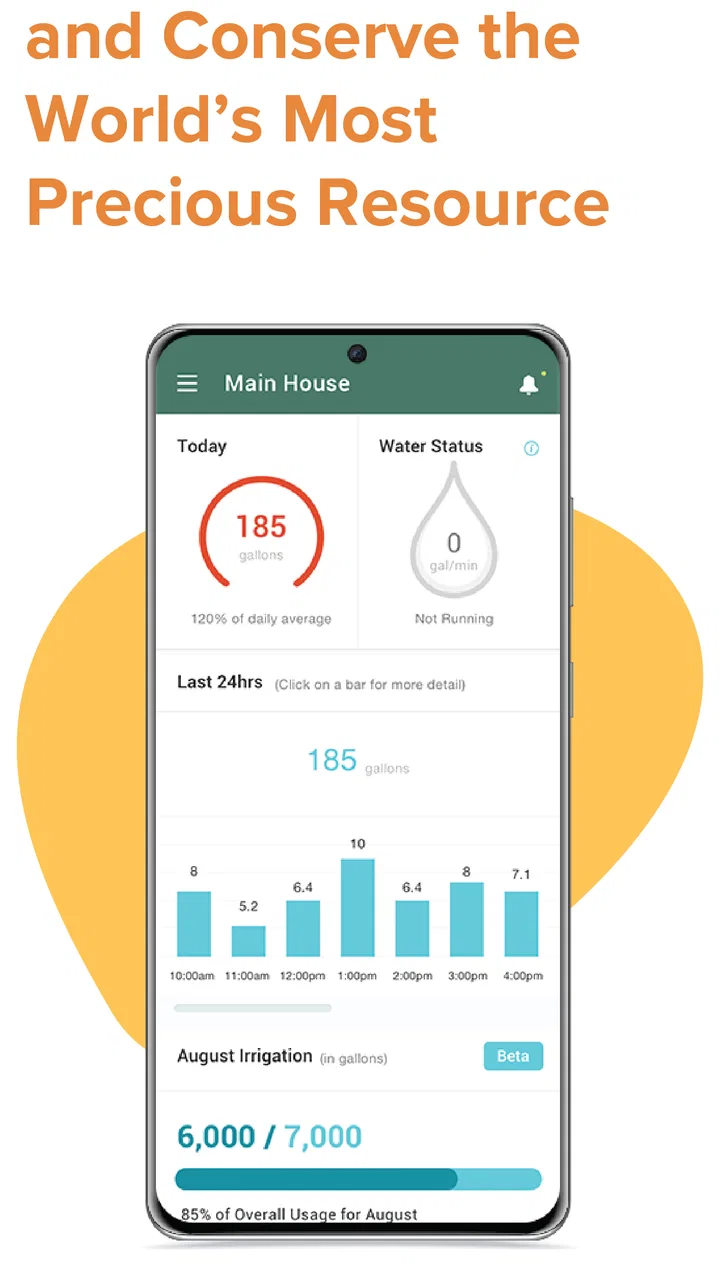
Flume focuses on intelligent leak detection and water management for a residential home. Those two ideas work together. Leak detection is the urgent side: unusual activity may point to a problem. Water management is the broader side: understanding how water is being used can help you spot patterns that would otherwise blend into normal household activity.
I find this more useful than a simple reminder to check pipes once in a while. A visual inspection only tells me what is happening where I can see it. A monitoring app gives me another angle, especially when the suspected issue is under a floor, inside a wall, or connected to a fixture that looks normal from the outside.
That distinction is important for expectations. Flume is not a general smart-home controller, and I would not choose it because I wanted a large collection of unrelated home features. Its purpose is narrower and more practical: helping a homeowner pay attention to water behavior.
The app is free, which makes trying it less intimidating. It is rated for Everyone, so its presentation is approachable for a household rather than aimed at a technical audience. The current version is 1.10.2, and the app requires operating system version 10 or later. I would check that requirement before planning a setup on an older phone.
What the information can change in everyday life
The real benefit is not the act of seeing water activity. It is the decision that follows. If the household is asleep and the app indicates activity that does not fit the usual routine, I have a reason to check toilets, taps, appliances, and outdoor connections. If the pattern appears during a time when nobody should be using water, the signal becomes more meaningful than a vague suspicion.
That can also change how I investigate a high water bill. Instead of blaming seasonal use immediately, I can compare the timing of activity with showers, laundry, dishwashing, irrigation, or guests staying over. The app cannot explain every cause by itself, but it can help narrow the search.
A less obvious use is checking the home after leaving. People often remember to lock doors and turn off lights but forget a tap, hose, or appliance connection. Water monitoring gives that final check a more specific purpose. It is particularly reassuring for anyone who spends stretches of time away from the house and wants an additional way to notice something abnormal.
How I would approach the first setup
I would not install Flume and immediately treat every alert or change as proof of a leak. First, I would use the home normally and learn what ordinary activity looks like. A household has many short bursts of water use, and a useful monitoring habit depends on recognizing those routines.
For a clearer baseline, I would avoid testing the app on an unusually busy day. A normal weekday gives better context than a day with visitors, cleaning, gardening, and several loads of laundry. Once I understand the household’s typical rhythm, unusual activity becomes easier to take seriously.
I would also keep a short note of events that could confuse interpretation. A toilet repair, a new appliance, outdoor watering, or a houseguest can all make a day look different. This small habit is one of the most practical ways to avoid overreacting to normal changes.
How it works in practice
Using Flume effectively is less like opening a traditional utility app and more like checking a household signal. I would look at it when something seems out of place, after work has been done on the plumbing, or before leaving the property for a longer period. That is a better routine than staring at the app every few minutes.
The app’s usefulness depends on context. A water event during a shower is expected. Activity after everyone has gone to bed deserves more attention. A repeated pattern is more persuasive than one isolated moment. I would treat the app as an early-warning layer: it tells me when to investigate, while the physical inspection tells me what is actually happening.
That separation between detection and diagnosis is a key trade-off. Flume can make me aware of a problem, but the next step may still involve walking through the house, checking fixtures, and calling a professional. Anyone expecting the app to identify the exact failed component without further work may find it less decisive than hoped.
A realistic household scenario
Imagine a family leaving for a weekend. Before departure, someone uses a sink and another person runs a final load of laundry. Those activities create a normal burst of water use. Later, while the house should be quiet, the app shows activity that does not match the plan.
I would first consider harmless explanations: perhaps a toilet tank is refilling, an outdoor tap was left open, or a scheduled household task was forgotten. If the activity continues, I would inspect the obvious fixtures and shut off what I can safely control. If the cause is not visible, I would arrange professional help rather than assuming the app has made a mistake.
This is where the capability has real practical value. The app does not need to solve the entire plumbing problem to be useful. A prompt to investigate before returning home to a larger mess can be worthwhile on its own. The benefit is strongest when the owner responds to the signal instead of dismissing it or panicking over it.
Useful habits that improve the experience
One useful habit is to connect unusual readings with a written household routine. If water activity appears at the same time every morning, it may correspond to a normal event that was simply forgotten. If it appears at random times when the home is empty, that pattern deserves more attention.
Another is to check after maintenance. When a plumber replaces a fixture or someone works on a supply line, I would use the app as one part of the follow-up. A normal-looking sink is not enough; observing the home afterward can provide extra confidence that the repair did not leave a continuing issue.
A third is to use the app as a conversation tool in a shared home. One person may assume another person is using the outdoor tap or running a washing machine. Looking at the same water information can replace guesswork with a more focused discussion. That is especially helpful in larger households where no single person sees every water-related activity.
I would also avoid turning conservation into a competition based on incomplete context. A low-use day is not automatically better if it involved an empty home, and a high-use day may be reasonable after cleaning or hosting guests. The app is most useful when it supports informed choices rather than guilt.
Where the trade-offs appear
The first limitation is that monitoring is only valuable when the household pays attention. Flume cannot help much if notifications are ignored, the phone is incompatible, or nobody is willing to investigate a suspicious pattern. This is not a set-and-forget guarantee; it is a tool that depends on a response.
The second is interpretation. Normal water use can look unusual when routines change. A visitor, a new work schedule, or seasonal outdoor activity can create readings that need explanation. I appreciate the warning concept, but I would not want to make an expensive decision based on one unexplained event without checking the physical situation.
The third is cost beyond the free app. In-app purchases are listed at $49.99 per item, so I would look carefully at what a particular purchase provides before committing. The free download lowers the barrier to exploring the app, but the overall value depends on the complete setup and on whether the monitoring benefit justifies that additional expense for a specific home.
There is also a practical limitation for renters or people in shared buildings. A homeowner with control over the property can act on a suspected plumbing issue more directly. A tenant may need permission, may not control the relevant equipment, or may have to report the concern to a landlord. Flume can still help create a reason to report something, but it cannot remove those responsibilities and restrictions.
People who only want a basic water-saving calculator may find the app more focused than they need. Likewise, someone looking for a full smart-home hub should compare it with a broader platform. Flume makes more sense when the priority is residential water awareness, not when leak monitoring is just one minor item on a long feature checklist.
How it compares with ordinary alternatives
The usual alternative is a manual inspection. That costs nothing and remains essential, but it is limited to the moments when someone remembers to perform it and to the places someone can see. Flume adds continuity to the process, which is valuable for slow or hidden problems.
Another alternative is relying on a utility bill. A bill can reveal that something changed, but it usually arrives after the water has already been used. Flume is more useful for timely investigation because it brings attention closer to the activity itself. I would still use the bill for longer-term perspective, but not as my only warning system.
Some homes may already have plumbing hardware or a broader home-monitoring system. In that case, the decision comes down to overlap. If the existing setup already gives clear water-use information and dependable alerts, adding another app may create duplication. If it only monitors doors, temperature, or general energy use, Flume’s narrower focus can fill a genuine gap.
The important comparison is not whether Flume replaces every option. It does not. Its advantage is specialization: it gives water behavior more attention than a checklist, a bill, or a general smart-home dashboard normally would. Its disadvantage is that specialization may feel unnecessary if the home has few plumbing concerns or already has equivalent monitoring.
Who gains the most from it
I think Flume is a strong fit for homeowners who want to reduce the chance of discovering a water problem too late. It is also appealing for people who travel, manage a second home, have older plumbing, or simply want more evidence when a water bill changes unexpectedly.
Families can benefit because water use is spread across several people and rooms. The app can help identify a pattern that no individual remembers creating. People who are actively trying to conserve water may also appreciate having something more concrete than intuition, provided they interpret the information alongside the household’s schedule.
The app is less compelling for someone who rents a small apartment, has no authority over plumbing repairs, and already receives equivalent monitoring through the building or property owner. It may also be a poor match for anyone unwilling to investigate alerts or pay for the necessary in-app option after the initial download. In that situation, a simple visual routine may be more realistic.
Flume has attracted a solid audience, with an average rating of 4.5 from around 500 ratings and more than 50 thousand installs. Those figures suggest that the focused idea resonates with many users, although they do not remove the need to check whether the app suits a particular home, phone, and plumbing arrangement.
My final take on the water-monitoring approach
I would recommend Flume to a friend who wants an extra layer of awareness around household water, especially if that friend travels or worries about hidden leaks. I like that its purpose is clear and that the app can support a sensible workflow: learn the normal pattern, notice an exception, inspect the home, and escalate the issue when necessary.
I would not present it as a magic leak detector. It cannot replace a physical check, a qualified repair, or good judgment about what counts as normal use. The free app is easy to consider, but the listed in-app purchase price means I would think through the complete cost before treating it as a long-term home-monitoring solution.
For the right household, the payoff is peace of mind backed by useful evidence rather than vague hope. For the wrong household, it may become another notification that nobody acts on. My recommendation is therefore practical: choose Flume when water monitoring is a real priority, establish a normal usage baseline, and use its warnings as prompts to investigate—not as automatic diagnoses.
FAQs for Flume
01What is Flume and what can I use it for?
Flume is a social media client designed to provide a cleaner, more focused way to browse and interact with visual social content. Depending on the version and platform, it may let you view posts, explore profiles, manage conversations, and engage with content through a streamlined interface. Before downloading, check the current feature list because availability can differ between Android, iOS, and web-based versions.
02Is Flume an official Instagram application?
Flume has historically been known as a third-party Instagram client rather than the official Instagram mobile application. This distinction is important because third-party apps depend on Instagram’s access rules, APIs, and account policies. Some functions may be limited, changed, or unavailable compared with the official app. Always review the developer information, privacy policy, and current login requirements before connecting your Instagram account.
03Is Flume safe to use with my social media account?
Safety depends on how the current version handles authentication, permissions, and user data. You should only download Flume from a trusted source, verify the developer name, and avoid entering credentials into suspicious pages or unofficial downloads. Review the permissions requested and privacy policy carefully. If the app redirects you to a browser for login, confirm that the address belongs to the legitimate service before continuing.
04Does Flume support all Instagram features?
Flume may not support every feature available in Instagram’s official app. Functions such as Stories, Reels, direct messaging, notifications, posting, account management, or newer interactive tools can depend on platform restrictions and the app’s current development status. Some features may work differently or be unavailable altogether. Users who need complete compatibility should compare Flume’s current feature list with the official Instagram application before switching.
05Is Flume free to download and use?
Flume’s pricing can vary according to the platform, edition, and current developer policy. Some versions may be free, while others may offer paid features, subscriptions, or a one-time purchase. In-app charges, if available, should be checked on the official store listing before installation. Also remember that using Flume to access Instagram still requires an Instagram account, and Instagram’s own service terms continue to apply.
Pros
- Clean
- photo-focused interface for browsing Instagram content.
- Supports multiple accounts for easier personal and professional use.
- Useful account switching without repeatedly entering login details.
- Offers a more streamlined experience than Instagram’s crowded layout.
- Helpful tools for organizing and viewing your social media feed.
Cons
- Some Instagram features may be unavailable or limited in Flume.
- Advanced tools can require a paid upgrade or subscription.
- Performance may vary after Instagram changes its platform or policies.
- Notifications may not be as reliable as those in the official app.
- New users may need time to learn the app’s alternative navigation.

Flume
Gallery